Buy amaronilogistics.eu ?
We are moving the project
amaronilogistics.eu .
Are you interested in purchasing the domain
amaronilogistics.eu ?
domain@kv-gmbh.de · 0541-91531010
Buy amaronilogistics.eu ?
How do I remove HTML via htaccess?
To remove HTML via htaccess, you can use the following code in your .htaccess file: ``` RewriteEngine On RewriteRule ^(.+)\.html$ /$1 [R=301,L] ``` This code will redirect any URL ending in .html to the same URL without the .html extension. This way, the HTML extension will be removed from the URL. Make sure to backup your .htaccess file before making any changes. **
How should the .htaccess file look like?
The .htaccess file is a plain text file that should be named exactly ".htaccess" (without any file extension) and placed in the root directory of your website. The file should contain directives that control various aspects of how your website functions, such as URL redirection, access control, and custom error pages. Each directive should be on a separate line and follow the syntax specified for that directive. It's important to be careful when editing the .htaccess file, as incorrect syntax or directives can cause errors on your website. **

Similar search terms for Htaccess
Top-Angebote
Products related to Htaccess:
-
Uplifted Finds Mini Portable Folding Stove And High Fidelity Thermal Logistics Architecture Mini Portable Folding Stove And High Fidelity Thermal Logistics ArchitectureCommand ultimate environmental confidence with this Stainless Steel Mini Folding Stove, a thermal regulation solution specifically engineered to act as a comprehensive tool for elite organization and superior technical ergonomics. Built with a...177,97 $*Shipping: 0,00 $Secure redirect to the provider
-
Uplifted Finds High Volume Safety Breakaway Logistics Hub redOptimize your pet inventory management with the HighVolume Safety Hub, a professionalgrade identification system engineered with multiunit deployment logic. This highutility lot features 100 individual collar modules, each constructed with a...165,97 $*Shipping: 0,00 $Secure redirect to the provider
-
Uplifted Finds High Volume Safety Breakaway Logistics Hub greenOptimize your pet inventory management with the HighVolume Safety Hub, a professionalgrade identification system engineered with multiunit deployment logic. This highutility lot features 100 individual collar modules, each constructed with a...165,97 $*Shipping: 0,00 $Secure redirect to the provider
-
Uplifted Finds High Volume Safety Breakaway Logistics Hub blackOptimize your pet inventory management with the HighVolume Safety Hub, a professionalgrade identification system engineered with multiunit deployment logic. This highutility lot features 100 individual collar modules, each constructed with a...165,97 $*Shipping: 0,00 $Secure redirect to the provider



-
Why is the .htaccess file not working?
The .htaccess file may not be working due to several reasons. It could be that the file is not named correctly, or it is placed in the wrong directory. Additionally, the server may not be configured to allow the use of .htaccess files, or there may be syntax errors within the file itself. It is also possible that the directives in the .htaccess file are being overridden by other configuration settings. Troubleshooting these potential issues can help in resolving the problem with the .htaccess file. **
-
How do you work with the .htaccess file?
To work with the .htaccess file, I typically use a text editor to make changes to the file. I can add or modify directives within the .htaccess file to control various aspects of the server's behavior, such as URL redirection, access control, and custom error pages. It's important to be cautious when working with the .htaccess file, as incorrect configurations can lead to server errors or security vulnerabilities. I also make sure to test any changes I make to the .htaccess file to ensure they are functioning as intended. **
-
How can I update the .htaccess file in Nextcloud?
To update the .htaccess file in Nextcloud, you can access it through the file manager in your web hosting control panel or via FTP. Locate the .htaccess file in the root directory of your Nextcloud installation. You can then edit the file directly using a text editor to make the necessary changes or additions. Save the changes and upload the updated .htaccess file back to the server. **
-
Why can't I block some IPv4 ranges with .htaccess?
You may not be able to block some IPv4 ranges with .htaccess because it is limited in its ability to handle large lists of IP addresses. .htaccess is not designed to efficiently handle blocking of large ranges of IP addresses, and attempting to do so can lead to performance issues and potential server overload. Additionally, .htaccess may not be the most effective method for blocking IP ranges, as it is better suited for smaller, more targeted blocks. It may be more effective to use a firewall or server-level configuration to block larger ranges of IP addresses. **


Where is my password located in the .htaccess file?
Your password is located in the .htpasswd file, not the .htaccess file. The .htpasswd file stores usernames and encrypted passwords for HTTP authentication. The .htaccess file is used to configure access control and other server settings, but it does not store passwords. **
How do I remove the part htaccess from a URL?
To remove the .htaccess part from a URL, you can simply delete or rename the .htaccess file in the root directory of your website. This file is responsible for configuring various settings for your website, including URL rewriting. By removing or renaming the .htaccess file, you will disable any URL rewriting rules that may be affecting your URLs. Make sure to backup the .htaccess file before making any changes, as it can impact the functionality of your website. **
Top-Angebote
Products related to Htaccess:
-
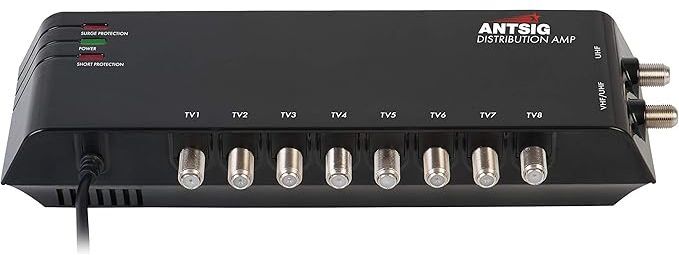
Antsig Distribution Amplifier 8 Way, NewEnsure crystal-clear signal strength across multiple devices with the Antsig Distribution Amplifier 8 Way — a reliable and high-performance solution for distributing digital TV, FM, or DAB signals to multiple TVs or tuners in your home or commercial setup. This amplifier is designed to boost signal strength and maintain picture and sound quality, especially in areas with weak reception. Whether you're connecting TVs in different rooms or setting up a home entertainment system, Antsig delivers superior signal stability and wide coverage, making it the perfect choice for seamless media enjoyment. 🔶 ( 8-Way Signal Distribution ) – Distributes amplified signal to up to 8 different TVs or devices without signal loss. 🔶 ( High Gain Amplification ) – Enhances weak signals, improving clarity and reception across all connected devices. 🔶 ( Digital TV, FM & DAB Compatible ) – Supports a wide range of signals for versatile use in your entertainment setup. 🔶 ( Easy Plug-and-Play Installation ) – Simple setup with no complex configuration needed; ready to go out of the box. 🔶 ( Low Noise Output ) – Delivers a clean, interference-free signal for superior audio and video performance. 🔶 ( Compact & Durable Design ) – Space-saving design fits easily into any setup and built with long-lasting components. 🔶 ( Ideal for Homes & Commercial Spaces ) – Perfect for large households, offices, apartments, and hotels. 🔶 ( Power Supply Included ) – Comes complete with its own power adapter for uninterrupted performance. 🔶 ( Stable Signal Across All Ports ) – Ensures consistent signal strength across all 8 outputs. 🔶 ( Wall-Mountable Option ) – Flexible installation with optional wall mounting for better space management. The Antsig Distribution Amplifier 8 Way is the ultimate solution for homes or businesses needing consistent, high-quality signal distribution across multiple screens. Say goodbye to signal dropouts and enjoy uninterrupted entertainment with strong, stable performance in every room. Ideal for digital TV installations, this amplifier ensures you get the best possible viewing and listening experience from all your connected devices.24,99 £*Shipping: 0,00 £Secure redirect to the provider
-
Radius Electrofusion Gas Distribution Valve 32mmDonkin MDPE (PE 80) electrofusion fittings, for use with MDPE (PE80) gas pipe, is manufactured to the requirements of B.G Transco Technical Standard PL2 - Part 4. Electrofusion fittings are supplied in individual sealed bags to avoid contamination of the joint surfaces prior to jointing.79,02 £*Shipping: 0,00 £Secure redirect to the provider
-
Uplifted Finds Mini Portable Folding Stove And High Fidelity Thermal Logistics Architecture Mini Portable Folding Stove And High Fidelity Thermal Logistics ArchitectureCommand ultimate environmental confidence with this Stainless Steel Mini Folding Stove, a thermal regulation solution specifically engineered to act as a comprehensive tool for elite organization and superior technical ergonomics. Built with a...177,97 $*Shipping: 0,00 $Secure redirect to the provider
-
Uplifted Finds High Volume Safety Breakaway Logistics Hub redOptimize your pet inventory management with the HighVolume Safety Hub, a professionalgrade identification system engineered with multiunit deployment logic. This highutility lot features 100 individual collar modules, each constructed with a...165,97 $*Shipping: 0,00 $Secure redirect to the provider
-
How do I remove HTML via htaccess?
To remove HTML via htaccess, you can use the following code in your .htaccess file: ``` RewriteEngine On RewriteRule ^(.+)\.html$ /$1 [R=301,L] ``` This code will redirect any URL ending in .html to the same URL without the .html extension. This way, the HTML extension will be removed from the URL. Make sure to backup your .htaccess file before making any changes. **
-
How should the .htaccess file look like?
The .htaccess file is a plain text file that should be named exactly ".htaccess" (without any file extension) and placed in the root directory of your website. The file should contain directives that control various aspects of how your website functions, such as URL redirection, access control, and custom error pages. Each directive should be on a separate line and follow the syntax specified for that directive. It's important to be careful when editing the .htaccess file, as incorrect syntax or directives can cause errors on your website. **
-
Why is the .htaccess file not working?
The .htaccess file may not be working due to several reasons. It could be that the file is not named correctly, or it is placed in the wrong directory. Additionally, the server may not be configured to allow the use of .htaccess files, or there may be syntax errors within the file itself. It is also possible that the directives in the .htaccess file are being overridden by other configuration settings. Troubleshooting these potential issues can help in resolving the problem with the .htaccess file. **
-
How do you work with the .htaccess file?
To work with the .htaccess file, I typically use a text editor to make changes to the file. I can add or modify directives within the .htaccess file to control various aspects of the server's behavior, such as URL redirection, access control, and custom error pages. It's important to be cautious when working with the .htaccess file, as incorrect configurations can lead to server errors or security vulnerabilities. I also make sure to test any changes I make to the .htaccess file to ensure they are functioning as intended. **
Similar search terms for Htaccess
-
Uplifted Finds High Volume Safety Breakaway Logistics Hub greenOptimize your pet inventory management with the HighVolume Safety Hub, a professionalgrade identification system engineered with multiunit deployment logic. This highutility lot features 100 individual collar modules, each constructed with a...165,97 $*Shipping: 0,00 $Secure redirect to the provider
-
Uplifted Finds High Volume Safety Breakaway Logistics Hub blackOptimize your pet inventory management with the HighVolume Safety Hub, a professionalgrade identification system engineered with multiunit deployment logic. This highutility lot features 100 individual collar modules, each constructed with a...165,97 $*Shipping: 0,00 $Secure redirect to the provider
-
Uplifted Finds High Volume Safety Breakaway Logistics Hub blueOptimize your pet inventory management with the HighVolume Safety Hub, a professionalgrade identification system engineered with multiunit deployment logic. This highutility lot features 100 individual collar modules, each constructed with a...165,97 $*Shipping: 0,00 $Secure redirect to the provider
-
Uplifted Finds High Volume Safety Breakaway Logistics Hub orangeOptimize your pet inventory management with the HighVolume Safety Hub, a professionalgrade identification system engineered with multiunit deployment logic. This highutility lot features 100 individual collar modules, each constructed with a...165,97 $*Shipping: 0,00 $Secure redirect to the provider
-
How can I update the .htaccess file in Nextcloud?
To update the .htaccess file in Nextcloud, you can access it through the file manager in your web hosting control panel or via FTP. Locate the .htaccess file in the root directory of your Nextcloud installation. You can then edit the file directly using a text editor to make the necessary changes or additions. Save the changes and upload the updated .htaccess file back to the server. **
-
Why can't I block some IPv4 ranges with .htaccess?
You may not be able to block some IPv4 ranges with .htaccess because it is limited in its ability to handle large lists of IP addresses. .htaccess is not designed to efficiently handle blocking of large ranges of IP addresses, and attempting to do so can lead to performance issues and potential server overload. Additionally, .htaccess may not be the most effective method for blocking IP ranges, as it is better suited for smaller, more targeted blocks. It may be more effective to use a firewall or server-level configuration to block larger ranges of IP addresses. **
-
Where is my password located in the .htaccess file?
Your password is located in the .htpasswd file, not the .htaccess file. The .htpasswd file stores usernames and encrypted passwords for HTTP authentication. The .htaccess file is used to configure access control and other server settings, but it does not store passwords. **
-
How do I remove the part htaccess from a URL?
To remove the .htaccess part from a URL, you can simply delete or rename the .htaccess file in the root directory of your website. This file is responsible for configuring various settings for your website, including URL rewriting. By removing or renaming the .htaccess file, you will disable any URL rewriting rules that may be affecting your URLs. Make sure to backup the .htaccess file before making any changes, as it can impact the functionality of your website. **
* All prices are inclusive of VAT and, if applicable, plus shipping costs. The offer information is based on the details provided by the respective shop and is updated through automated processes. Real-time updates do not occur, so deviations can occur in individual cases. ** Note: Parts of this content were created by AI.