Buy amaronilogistics.eu ?
We are moving the project
amaronilogistics.eu .
Are you interested in purchasing the domain
amaronilogistics.eu ?
domain@kv-gmbh.de · 0541-91531010
Buy amaronilogistics.eu ?
Are we more Homo sapiens or Homo deus?
As of now, we are more Homo sapiens, as we are still primarily driven by our biological and evolutionary instincts. However, with the rapid advancements in technology and the potential for genetic engineering, some argue that we are on the path to becoming more like Homo deus, or "god-man," as described by Yuval Noah Harari in his book of the same name. This concept suggests that humans may eventually transcend our current limitations and become more god-like in our abilities and capabilities. Ultimately, the answer to this question may depend on the trajectory of future technological and biological developments. **
Is Homo neanderthalensis a subspecies of Homo sapiens?
No, Homo neanderthalensis is not a subspecies of Homo sapiens. Neanderthals and modern humans are separate species that evolved from a common ancestor. Neanderthals lived in Europe and Asia, while Homo sapiens originated in Africa. Although there is evidence of interbreeding between the two species, they are distinct and separate branches of the human evolutionary tree. **

Similar search terms for Homo
Top-Angebote
Products related to Homo:
-
Penguin Becky Albertalli 4 Books Collection Set (Simon vs. the Homo Sapiens Agenda, Love Simon, Leah on the Offbeat, The Upside of Unrequited)Simon vs. the Homo Sapiens Agenda Straight people should have to come out too. And the more awkward it is, the better. Simon Spier is sixteen and trying to work out who he is - and what he's looking for. But when one of his emails to the very distracting Blue falls into the wrong hands, things get all kinds of complicated. Because, for Simon, falling for Blue is a big deal ... It's a holy freaking huge awesome deal. Love Simon Straight people should have to come out too. And the more awkward it is, the better. Simon Spier is sixteen and trying to work out who he is - and what he's looking for. But when one of his emails to the very distracting Blue falls into the wrong hands, things get all kinds of complicated. Because, for Simon, falling for Blue is a big deal ... It's a holy freaking huge awesome deal. Leah on the Offbeat When it comes to drumming, Leah Burke is usually on beat- but real life isn't always so rhythmic. The only child of a single mum, and her life is less privileged than her friends. Her mum knows she's bisexual, but Leah hasn't mustered the courage to tell her friends. Not even her openly gay BFF, Simon. Prom and college are on the horizon, and tensions are running high. Can Leah still strike the right note, when the people she loves are fighting? And how can she cope knowing that she might love one of her friends more than she ever intended? The Upside of Unrequited I don't entirely understand how anyone gets a boyfriend. Or a girlfriend. It just seems like the most impossible odds. A perfect alignment of feelings and circumstances . . . Molly Peskin-Suso knows all about unrequited love. No matter how many times her twin sister, Cassie, tells her to woman up, Molly is always careful. Better to be careful than be hurt. But when Cassie gets a new girlfriend who comes with a cute hipster-boy sidekick, everything changes. Will is funny, flirtatious and basically the perfect first boyfriend. There's only one problem: Molly's coworker, Reid: the awkward Tolkien superfan she could never fall for . . . right?24,99 £*Shipping: 2,99 £Secure redirect to the provider
-
Vintage ltd Yuval Noah Harari Collection 4 Books Set (Homo Deus, Sapiens A Brief History of Humankind, 21 Lessons for the 21st Century and Nexus)Titles: Nexus Homo Deus Sapiens: A Brief History of Humankind 21 Lessons for the 21st Century Yuval Noah Harari Collection 4 Books Set (Homo Deus, Sapiens A Brief History of Humankind, 21 Lessons for the 21st Century & Nexus): Nexus: Stories brought us together.Books spread our ideas – and our mythologies.The internet promised infinite knowledge.The algorithm learned our secrets – and then turned us against each other.What will AI do? Homo Deus: Homo Deus explores the projects, dreams and nightmares that will shape the twenty-first century and beyond - from overcoming death to creating artificial life.It asks the fundamental questions: how can we protect this fragile world from our own destructive power? And what does our future hold? Sapiens: A Brief History of Humankind: What makes us brilliant? What makes us deadly? What makes us Sapiens? One of the world's preeminent historians and thinkers, Yuval Noah Harari challenges everything we know about being human.Earth is 4.5 billion years old. In just a fraction of that time, one species among countless others has conquered it: us. 21 Lessons for the 21st Century: In twenty-one bite-sized lessons, Yuval Noah Harari explores what it means to be human in an age of bewilderment.How can we protect ourselves from nuclear war, ecological cataclysms and technological disruptions? What can we do about the epidemic of fake news or the threat of terrorism? What should we teach our children?32,99 £*Shipping: 2,99 £Secure redirect to the provider
-
Radius Electrofusion Gas Distribution Valve 32mmDonkin MDPE (PE 80) electrofusion fittings, for use with MDPE (PE80) gas pipe, is manufactured to the requirements of B.G Transco Technical Standard PL2 - Part 4. Electrofusion fittings are supplied in individual sealed bags to avoid contamination of the joint surfaces prior to jointing.79,02 £*Shipping: 0,00 £Secure redirect to the provider
-
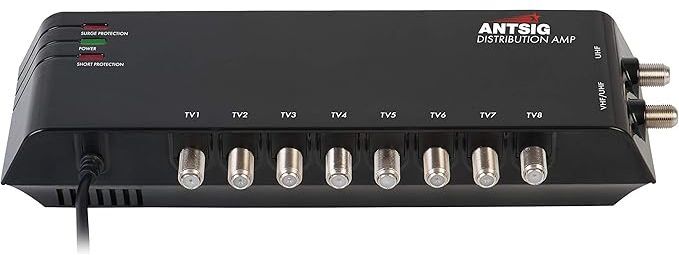
Antsig Distribution Amplifier 8 Way, NewEnsure crystal-clear signal strength across multiple devices with the Antsig Distribution Amplifier 8 Way — a reliable and high-performance solution for distributing digital TV, FM, or DAB signals to multiple TVs or tuners in your home or commercial setup. This amplifier is designed to boost signal strength and maintain picture and sound quality, especially in areas with weak reception. Whether you're connecting TVs in different rooms or setting up a home entertainment system, Antsig delivers superior signal stability and wide coverage, making it the perfect choice for seamless media enjoyment. 🔶 ( 8-Way Signal Distribution ) – Distributes amplified signal to up to 8 different TVs or devices without signal loss. 🔶 ( High Gain Amplification ) – Enhances weak signals, improving clarity and reception across all connected devices. 🔶 ( Digital TV, FM & DAB Compatible ) – Supports a wide range of signals for versatile use in your entertainment setup. 🔶 ( Easy Plug-and-Play Installation ) – Simple setup with no complex configuration needed; ready to go out of the box. 🔶 ( Low Noise Output ) – Delivers a clean, interference-free signal for superior audio and video performance. 🔶 ( Compact & Durable Design ) – Space-saving design fits easily into any setup and built with long-lasting components. 🔶 ( Ideal for Homes & Commercial Spaces ) – Perfect for large households, offices, apartments, and hotels. 🔶 ( Power Supply Included ) – Comes complete with its own power adapter for uninterrupted performance. 🔶 ( Stable Signal Across All Ports ) – Ensures consistent signal strength across all 8 outputs. 🔶 ( Wall-Mountable Option ) – Flexible installation with optional wall mounting for better space management. The Antsig Distribution Amplifier 8 Way is the ultimate solution for homes or businesses needing consistent, high-quality signal distribution across multiple screens. Say goodbye to signal dropouts and enjoy uninterrupted entertainment with strong, stable performance in every room. Ideal for digital TV installations, this amplifier ensures you get the best possible viewing and listening experience from all your connected devices.24,99 £*Shipping: 0,00 £Secure redirect to the provider


-
What is the difference between Homo erectus and Homo ergaster?
Homo erectus and Homo ergaster are both extinct species of early humans, but they have some key differences. Homo ergaster is believed to be an ancestor of Homo erectus and is considered to be slightly older, dating back around 1.9 million years ago. Homo ergaster is thought to have a more slender build and longer legs compared to Homo erectus. Additionally, Homo ergaster is believed to have originated in Africa, while Homo erectus is known to have migrated to other parts of the world. **
-
What is the difference between Homo oeconomicus and Homo sapiens?
Homo oeconomicus is a theoretical concept in economics that describes humans as rational, self-interested decision-makers who always act in a way that maximizes their own utility. This model assumes that individuals have perfect information, make decisions based on cost-benefit analysis, and have consistent preferences over time. On the other hand, Homo sapiens refers to actual human beings, who are influenced by emotions, social norms, and cognitive biases in their decision-making. Unlike Homo oeconomicus, Homo sapiens are not always rational and may not always act in their own self-interest. This difference highlights the limitations of the Homo oeconomicus model in capturing the complexity of human behavior. **
-
What is the difference between Homo oecologicus and Homo oeconomicus?
Homo oecologicus and Homo oeconomicus are two different conceptual models used to understand human behavior. Homo oecologicus is a theoretical model that views humans as being inherently connected to and dependent on their natural environment. This model emphasizes the importance of sustainability and the need to consider the ecological impact of human actions. On the other hand, Homo oeconomicus is a model that views humans as rational, self-interested actors who make decisions based on maximizing their own utility or economic gain. This model is often used in economics and assumes that individuals make decisions based on cost-benefit analysis and the pursuit of their own self-interest. In summary, the main difference between the two models is their focus - Homo oecologicus emphasizes the ecological impact of human behavior, while Homo oeconomicus focuses on the economic rationality of human decision-making. **
-
What is the difference between Homo erectus and Homo habilis?
Homo erectus and Homo habilis are both early human species, but there are several key differences between them. Homo habilis, which lived around 2.4 to 1.4 million years ago, was smaller in stature and had a smaller brain size compared to Homo erectus. Homo habilis is also believed to have been more adept at using tools, which is reflected in its name, meaning "handy man." On the other hand, Homo erectus, which lived around 1.9 million to 143,000 years ago, had a larger brain size and was the first human species to migrate out of Africa. Additionally, Homo erectus is believed to have had a more advanced ability to control fire and may have been the first human species to use language. **

What are examples of the Homo oeconomicus and the Homo sociologicus?
The Homo oeconomicus is a theoretical concept in economics that describes a rational, self-interested individual who makes decisions based on maximizing their own utility or economic well-being. An example of Homo oeconomicus might be a person who always seeks to maximize their financial gains, makes decisions based on cost-benefit analysis, and acts in their own self-interest without considering the impact on others. On the other hand, the Homo sociologicus is a theoretical concept in sociology that describes an individual who is influenced by social norms, values, and the expectations of their community. An example of Homo sociologicus might be a person who makes decisions based on the expectations and norms of their social group, prioritizes the well-being of the community over individual gain, and is influenced by social pressures and cultural values in their decision-making. **
What is the difference between Homo sapiens and Homo sapiens sapiens?
Homo sapiens refers to modern humans, while Homo sapiens sapiens specifically refers to anatomically modern humans. The term Homo sapiens sapiens is used to distinguish modern humans from earlier subspecies of Homo sapiens. The addition of "sapiens" in Homo sapiens sapiens emphasizes the advanced cognitive abilities and anatomical features that characterize modern humans. **
Top-Angebote
Products related to Homo:
-
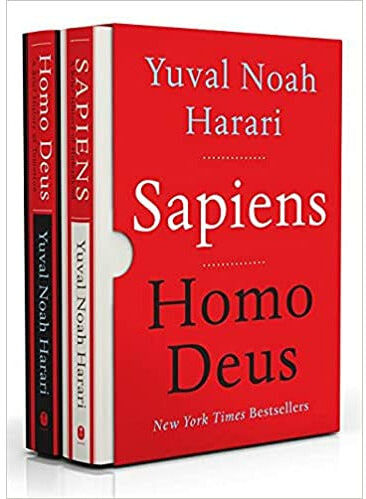
books4people BOX MISSING - Sapiens/Homo Deus Box SetDiscover humanity's past and its future in this in this special box set featuring the bestselling Sapiens--a reading pick of President Barack Obama, Bill Gates, and Mark Zuckerberg--and its acclaimed companion Homo Deus.32,99 £*Shipping: 2,99 £Secure redirect to the provider
-
Vintage Yuval Noah Harari 3 Books Collection Set – Sapiens, Homo Deus & 21 Lessons for the 21st Century Bestselling History, Future & Society BooksExplore humanity’s past, present, and future with the Yuval Noah Harari 3 Books Collection Set, featuring the international bestsellers Sapiens, Homo Deus, and 21 Lessons for the 21st Century. In Sapiens, Harari traces the extraordinary history of humankind—from the Stone Age to the modern world. Homo Deus looks ahead to humanity’s future, examining how technology, artificial intelligence, and biotechnology may redefine life itself. 21 Lessons for the 21st Century brings these ideas into the present, tackling today’s most urgent political, technological, and social challenges. Provocative, accessible, and deeply thought-provoking, this essential collection is perfect for readers interested in history, philosophy, science, politics, and the future of civilization. Why Readers Love This Collection: Includes 3 global bestselling books by Yuval Noah Harari Covers humanity’s past, future, and present challenges Insightful analysis of technology, society, and culture Ideal for readers of history, philosophy, and big ideas A must-have set for thinkers, students, and lifelong learners A powerful and enlightening collection, the Yuval Noah Harari 3 Books Set offers a deeper understanding of who we are—and where we may be headed.19,95 £*Shipping: 2,99 £Secure redirect to the provider
-
Penguin Becky Albertalli 4 Books Collection Set (Simon vs. the Homo Sapiens Agenda, Love Simon, Leah on the Offbeat, The Upside of Unrequited)Simon vs. the Homo Sapiens Agenda Straight people should have to come out too. And the more awkward it is, the better. Simon Spier is sixteen and trying to work out who he is - and what he's looking for. But when one of his emails to the very distracting Blue falls into the wrong hands, things get all kinds of complicated. Because, for Simon, falling for Blue is a big deal ... It's a holy freaking huge awesome deal. Love Simon Straight people should have to come out too. And the more awkward it is, the better. Simon Spier is sixteen and trying to work out who he is - and what he's looking for. But when one of his emails to the very distracting Blue falls into the wrong hands, things get all kinds of complicated. Because, for Simon, falling for Blue is a big deal ... It's a holy freaking huge awesome deal. Leah on the Offbeat When it comes to drumming, Leah Burke is usually on beat- but real life isn't always so rhythmic. The only child of a single mum, and her life is less privileged than her friends. Her mum knows she's bisexual, but Leah hasn't mustered the courage to tell her friends. Not even her openly gay BFF, Simon. Prom and college are on the horizon, and tensions are running high. Can Leah still strike the right note, when the people she loves are fighting? And how can she cope knowing that she might love one of her friends more than she ever intended? The Upside of Unrequited I don't entirely understand how anyone gets a boyfriend. Or a girlfriend. It just seems like the most impossible odds. A perfect alignment of feelings and circumstances . . . Molly Peskin-Suso knows all about unrequited love. No matter how many times her twin sister, Cassie, tells her to woman up, Molly is always careful. Better to be careful than be hurt. But when Cassie gets a new girlfriend who comes with a cute hipster-boy sidekick, everything changes. Will is funny, flirtatious and basically the perfect first boyfriend. There's only one problem: Molly's coworker, Reid: the awkward Tolkien superfan she could never fall for . . . right?24,99 £*Shipping: 2,99 £Secure redirect to the provider
-
Vintage ltd Yuval Noah Harari Collection 4 Books Set (Homo Deus, Sapiens A Brief History of Humankind, 21 Lessons for the 21st Century and Nexus)Titles: Nexus Homo Deus Sapiens: A Brief History of Humankind 21 Lessons for the 21st Century Yuval Noah Harari Collection 4 Books Set (Homo Deus, Sapiens A Brief History of Humankind, 21 Lessons for the 21st Century & Nexus): Nexus: Stories brought us together.Books spread our ideas – and our mythologies.The internet promised infinite knowledge.The algorithm learned our secrets – and then turned us against each other.What will AI do? Homo Deus: Homo Deus explores the projects, dreams and nightmares that will shape the twenty-first century and beyond - from overcoming death to creating artificial life.It asks the fundamental questions: how can we protect this fragile world from our own destructive power? And what does our future hold? Sapiens: A Brief History of Humankind: What makes us brilliant? What makes us deadly? What makes us Sapiens? One of the world's preeminent historians and thinkers, Yuval Noah Harari challenges everything we know about being human.Earth is 4.5 billion years old. In just a fraction of that time, one species among countless others has conquered it: us. 21 Lessons for the 21st Century: In twenty-one bite-sized lessons, Yuval Noah Harari explores what it means to be human in an age of bewilderment.How can we protect ourselves from nuclear war, ecological cataclysms and technological disruptions? What can we do about the epidemic of fake news or the threat of terrorism? What should we teach our children?32,99 £*Shipping: 2,99 £Secure redirect to the provider
-
Are we more Homo sapiens or Homo deus?
As of now, we are more Homo sapiens, as we are still primarily driven by our biological and evolutionary instincts. However, with the rapid advancements in technology and the potential for genetic engineering, some argue that we are on the path to becoming more like Homo deus, or "god-man," as described by Yuval Noah Harari in his book of the same name. This concept suggests that humans may eventually transcend our current limitations and become more god-like in our abilities and capabilities. Ultimately, the answer to this question may depend on the trajectory of future technological and biological developments. **
-
Is Homo neanderthalensis a subspecies of Homo sapiens?
No, Homo neanderthalensis is not a subspecies of Homo sapiens. Neanderthals and modern humans are separate species that evolved from a common ancestor. Neanderthals lived in Europe and Asia, while Homo sapiens originated in Africa. Although there is evidence of interbreeding between the two species, they are distinct and separate branches of the human evolutionary tree. **
-
What is the difference between Homo erectus and Homo ergaster?
Homo erectus and Homo ergaster are both extinct species of early humans, but they have some key differences. Homo ergaster is believed to be an ancestor of Homo erectus and is considered to be slightly older, dating back around 1.9 million years ago. Homo ergaster is thought to have a more slender build and longer legs compared to Homo erectus. Additionally, Homo ergaster is believed to have originated in Africa, while Homo erectus is known to have migrated to other parts of the world. **
-
What is the difference between Homo oeconomicus and Homo sapiens?
Homo oeconomicus is a theoretical concept in economics that describes humans as rational, self-interested decision-makers who always act in a way that maximizes their own utility. This model assumes that individuals have perfect information, make decisions based on cost-benefit analysis, and have consistent preferences over time. On the other hand, Homo sapiens refers to actual human beings, who are influenced by emotions, social norms, and cognitive biases in their decision-making. Unlike Homo oeconomicus, Homo sapiens are not always rational and may not always act in their own self-interest. This difference highlights the limitations of the Homo oeconomicus model in capturing the complexity of human behavior. **
Similar search terms for Homo
-
Radius Electrofusion Gas Distribution Valve 32mmDonkin MDPE (PE 80) electrofusion fittings, for use with MDPE (PE80) gas pipe, is manufactured to the requirements of B.G Transco Technical Standard PL2 - Part 4. Electrofusion fittings are supplied in individual sealed bags to avoid contamination of the joint surfaces prior to jointing.79,02 £*Shipping: 0,00 £Secure redirect to the provider
-
Antsig Distribution Amplifier 8 Way, NewEnsure crystal-clear signal strength across multiple devices with the Antsig Distribution Amplifier 8 Way — a reliable and high-performance solution for distributing digital TV, FM, or DAB signals to multiple TVs or tuners in your home or commercial setup. This amplifier is designed to boost signal strength and maintain picture and sound quality, especially in areas with weak reception. Whether you're connecting TVs in different rooms or setting up a home entertainment system, Antsig delivers superior signal stability and wide coverage, making it the perfect choice for seamless media enjoyment. 🔶 ( 8-Way Signal Distribution ) – Distributes amplified signal to up to 8 different TVs or devices without signal loss. 🔶 ( High Gain Amplification ) – Enhances weak signals, improving clarity and reception across all connected devices. 🔶 ( Digital TV, FM & DAB Compatible ) – Supports a wide range of signals for versatile use in your entertainment setup. 🔶 ( Easy Plug-and-Play Installation ) – Simple setup with no complex configuration needed; ready to go out of the box. 🔶 ( Low Noise Output ) – Delivers a clean, interference-free signal for superior audio and video performance. 🔶 ( Compact & Durable Design ) – Space-saving design fits easily into any setup and built with long-lasting components. 🔶 ( Ideal for Homes & Commercial Spaces ) – Perfect for large households, offices, apartments, and hotels. 🔶 ( Power Supply Included ) – Comes complete with its own power adapter for uninterrupted performance. 🔶 ( Stable Signal Across All Ports ) – Ensures consistent signal strength across all 8 outputs. 🔶 ( Wall-Mountable Option ) – Flexible installation with optional wall mounting for better space management. The Antsig Distribution Amplifier 8 Way is the ultimate solution for homes or businesses needing consistent, high-quality signal distribution across multiple screens. Say goodbye to signal dropouts and enjoy uninterrupted entertainment with strong, stable performance in every room. Ideal for digital TV installations, this amplifier ensures you get the best possible viewing and listening experience from all your connected devices.24,99 £*Shipping: 0,00 £Secure redirect to the provider
-
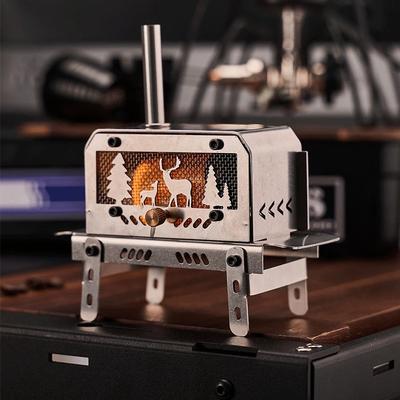
Uplifted Finds Mini Portable Folding Stove And High Fidelity Thermal Logistics Architecture Mini Portable Folding Stove And High Fidelity Thermal Logistics ArchitectureCommand ultimate environmental confidence with this Stainless Steel Mini Folding Stove, a thermal regulation solution specifically engineered to act as a comprehensive tool for elite organization and superior technical ergonomics. Built with a...177,97 $*Shipping: 0,00 $Secure redirect to the provider
-
Uplifted Finds High Volume Safety Breakaway Logistics Hub multicolorOptimize your pet inventory management with the HighVolume Safety Hub, a professionalgrade identification system engineered with multiunit deployment logic. This highutility lot features 100 individual collar modules, each constructed with a...165,97 $*Shipping: 0,00 $Secure redirect to the provider
-
What is the difference between Homo oecologicus and Homo oeconomicus?
Homo oecologicus and Homo oeconomicus are two different conceptual models used to understand human behavior. Homo oecologicus is a theoretical model that views humans as being inherently connected to and dependent on their natural environment. This model emphasizes the importance of sustainability and the need to consider the ecological impact of human actions. On the other hand, Homo oeconomicus is a model that views humans as rational, self-interested actors who make decisions based on maximizing their own utility or economic gain. This model is often used in economics and assumes that individuals make decisions based on cost-benefit analysis and the pursuit of their own self-interest. In summary, the main difference between the two models is their focus - Homo oecologicus emphasizes the ecological impact of human behavior, while Homo oeconomicus focuses on the economic rationality of human decision-making. **
-
What is the difference between Homo erectus and Homo habilis?
Homo erectus and Homo habilis are both early human species, but there are several key differences between them. Homo habilis, which lived around 2.4 to 1.4 million years ago, was smaller in stature and had a smaller brain size compared to Homo erectus. Homo habilis is also believed to have been more adept at using tools, which is reflected in its name, meaning "handy man." On the other hand, Homo erectus, which lived around 1.9 million to 143,000 years ago, had a larger brain size and was the first human species to migrate out of Africa. Additionally, Homo erectus is believed to have had a more advanced ability to control fire and may have been the first human species to use language. **
-
What are examples of the Homo oeconomicus and the Homo sociologicus?
The Homo oeconomicus is a theoretical concept in economics that describes a rational, self-interested individual who makes decisions based on maximizing their own utility or economic well-being. An example of Homo oeconomicus might be a person who always seeks to maximize their financial gains, makes decisions based on cost-benefit analysis, and acts in their own self-interest without considering the impact on others. On the other hand, the Homo sociologicus is a theoretical concept in sociology that describes an individual who is influenced by social norms, values, and the expectations of their community. An example of Homo sociologicus might be a person who makes decisions based on the expectations and norms of their social group, prioritizes the well-being of the community over individual gain, and is influenced by social pressures and cultural values in their decision-making. **
-
What is the difference between Homo sapiens and Homo sapiens sapiens?
Homo sapiens refers to modern humans, while Homo sapiens sapiens specifically refers to anatomically modern humans. The term Homo sapiens sapiens is used to distinguish modern humans from earlier subspecies of Homo sapiens. The addition of "sapiens" in Homo sapiens sapiens emphasizes the advanced cognitive abilities and anatomical features that characterize modern humans. **
* All prices are inclusive of VAT and, if applicable, plus shipping costs. The offer information is based on the details provided by the respective shop and is updated through automated processes. Real-time updates do not occur, so deviations can occur in individual cases. ** Note: Parts of this content were created by AI.