Buy amaronilogistics.eu ?
We are moving the project
amaronilogistics.eu .
Are you interested in purchasing the domain
amaronilogistics.eu ?
domain@kv-gmbh.de · 0541-91531010
Buy amaronilogistics.eu ?
What does the density distribution of the normal distribution look like?
The density distribution of the normal distribution is bell-shaped and symmetrical. It is characterized by a peak at the mean, with the density decreasing as you move away from the mean in both directions. The tails of the distribution extend infinitely in both directions, but the density becomes increasingly small as you move further from the mean. The density distribution is also characterized by its standard deviation, which determines the spread of the distribution. **
What is the density function for the normal distribution?
The density function for the normal distribution is given by the formula: f(x) = (1 / (σ * √(2π))) * e^(-(x-μ)^2 / (2σ^2)) where μ is the mean of the distribution, σ is the standard deviation, π is the mathematical constant pi, and e is the base of the natural logarithm. This function describes the probability density of a random variable following a normal distribution at a given value x. The normal distribution is symmetric and bell-shaped, with the density function reaching its maximum at the mean μ and decreasing as we move away from the mean in both directions. **


Similar search terms for Density
Top-Angebote
Products related to Density:
-
Lola Cosmetics Density Hair Acidifier 250mLA cleansing product for hair loss or thinning. Revive fine, thinning hair with Density Acidifier – a pH-balancing treatment for intense repair, strength, and anti-breakage protection. Intensive pH 3.0–4.0 repair. Strengthens and protects against chemical, thermal, and environmental damage. Prevents hair breakage and fall.8,16 £*Shipping: 7,11 £Secure redirect to the provider
-
Lola Cosmetics Density Hair Mask 230gA hair mask for hair loss or thinning. Restore hair strength and volume with This product, designed for fine, weak, or thinning hair. Rebuilds hair density and resilience. Reduces breakage and hair loss. Stimulates stronger, healthier development. Nourishes deeply from root to tip. Ideal for fragile, porous, or damaged strands.8,85 £*Shipping: 7,11 £Secure redirect to the provider
-
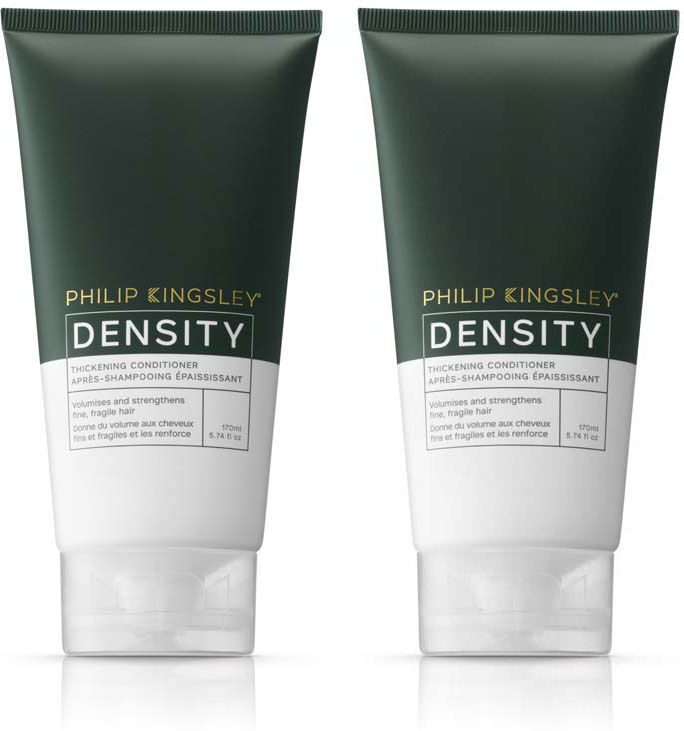
Philip Kingsley Density Conditioner 170ml DoubleStock up and save with this value double pack. Treat your fine, fragile hair with Philip Kingsley Density Thickening Conditioner. Improve the health, condition and quality of fine, fragile and thinning hair Discover thicker, more volumised hair straight from the first use. The Density Thickening Conditioner contains a unique blend of Hyper-Branched Polymers and Hydrolyzed Pea Peptides to instantly volumise fine hair. Biomimetic ceramides within this lightweight formula help to replace lost lipids in damaged hair, whilst sealing and smoothing the cuticle to help detangle and improve hair's resistance against everyday threats. Hair strands are left strengthened against future damage, as well as softer with heightened volume. Enjoy increased hair volume by 25% after one use when used in combination with Density Thickening Conditioner and Density Thickening Protein Spray* Using Density Shampoo & Conditioner together significantly reduces the likelihood of hair breakage** *Independent Instrumental Tests, compared to a standard shampoo and conditioner. **Independent Instrumental Tests, compared to both untreated hair and hair treated with a leading volumising shampoo and conditioner. Ingredients: Aqua/Water/Eau, Cetearyl Alcohol, Hydrogenated Castor Oil/Sebacic Acid Copolymer, Pisum Sativum (Pea) Peptide, Behentrimonium Chloride, Cocos Nucifera (Coconut) Oil, Phenoxyethanol, Hydroxypropyl Starch Phosphate, Polyquaternium-110, Parfum (Fragrance), Isopropyl Alcohol, Behenyl/Stearyl Aminopropanediol Esters, Ethylhexylglycerin, Ricinus Communis (Castor) Seed Oil, Sodium Hydroxide, Citric Acid, Disodium EDTA, Leuconostoc/Radish Root Ferment Filtrate, Limonene, Linalool.55,80 £*Shipping: 0,00 £Secure redirect to the provider
-
Uplift Essentials High Density Pump Protection Foam Filters (4 Pack) High Density Pump Protection Foam Filters (4 Pack)Extend the life of your pets hydration system with the HighDensity Pump Protection Foam Filters. Specifically designed for the popular SMA800 water pump found in most stainless steel cat fountains, these prefilter sponges act as the first line of...41,97 $*Shipping: 0,00 $Secure redirect to the provider



-
What is the density function of the distribution function?
The density function of a distribution function is the derivative of the distribution function. It represents the rate at which the probability density changes with respect to the variable of interest. In other words, the density function describes how the probability is distributed across different values of the variable. The area under the density function curve over a certain interval gives the probability of the variable falling within that interval. **
-
What is the probability density function of the exponential distribution?
The probability density function (PDF) of the exponential distribution is given by f(x) = λe^(-λx), where λ is the rate parameter and x is the random variable. This function describes the probability of observing a specific value of x in the exponential distribution. The exponential distribution is commonly used to model the time between events in a Poisson process, such as the time between arrivals of customers at a service point or the time between radioactive decays. The PDF of the exponential distribution is non-negative for all x and integrates to 1 over the range of possible values of x, making it a valid probability distribution function. **
-
What is the probability density function and cumulative distribution function for 2?
The probability density function (PDF) for a continuous random variable 2 is a function that describes the likelihood of the variable taking on a particular value. Since 2 is a constant, its PDF is a Dirac delta function, which is zero everywhere except at 2, where it is infinite. The cumulative distribution function (CDF) for 2 is a function that gives the probability that the random variable is less than or equal to a certain value. For 2, the CDF is a step function that is 0 for x < 2 and 1 for x >= 2. This means that the probability of 2 being less than or equal to any value less than 2 is 0, and the probability of 2 being less than or equal to any value greater than or equal to 2 is 1. **
-
What is the difference between a density function and a distribution function?
A density function, also known as a probability density function, describes the likelihood of a random variable taking on a specific value within a given range. It is a function that assigns probabilities to different outcomes. On the other hand, a distribution function, also known as a cumulative distribution function, gives the probability that a random variable is less than or equal to a certain value. It provides a cumulative view of the probabilities of all values up to a certain point. In essence, the density function gives the probability density at a specific point, while the distribution function gives the cumulative probability up to that point. **


How do you calculate the marginal density and the joint density?
To calculate the marginal density of a random variable, you integrate the joint density function over all possible values of the other random variables. For example, to find the marginal density of X in a joint density function f(x,y), you would integrate f(x,y) with respect to y. To calculate the joint density of two random variables, you multiply the marginal densities of each variable together. For example, if X and Y are independent random variables with marginal densities f(x) and g(y) respectively, then the joint density function is given by h(x,y) = f(x) * g(y). In summary, to calculate the marginal density, integrate the joint density over all possible values of the other random variables, and to calculate the joint density, multiply the marginal densities of each variable together. **
How do you calculate density in mathematics and what is density?
Density is a measure of how much mass is contained in a given volume. In mathematics, density is calculated by dividing the mass of an object by its volume. The formula for density is: density = mass/volume. This calculation allows us to determine how tightly packed the particles of a substance are, and it is commonly used in physics and engineering to describe the properties of materials. **
Top-Angebote
Products related to Density:
-
Uplift Essentials High Density Bamboo Cotton Applicators High Density Bamboo Cotton ApplicatorsOptimize your personal care and cosmetic routine with the Professional HighDensity Bamboo Cotton Applicators. Engineered for surgical precision and ecological sustainability, these dualheaded swabs feature premium, 100% natural cotton tips bonded to...34,97 $*Shipping: 0,00 $Secure redirect to the provider
-
Philip Kingsley Density Conditioner 170mlTreat your fine, fragile hair with Philip Kingsley Density Thickening Conditioner. Improve the health, condition and quality of fine, fragile and thinning hair Discover thicker, more volumised hair straight from the first use. The Density Thickening Conditioner contains a unique blend of Hyper-Branched Polymers and Hydrolyzed Pea Peptides to instantly volumise fine hair. Biomimetic ceramides within this lightweight formula help to replace lost lipids in damaged hair, whilst sealing and smoothing the cuticle to help detangle and improve hair's resistance against everyday threats. Hair strands are left strengthened against future damage, as well as softer with heightened volume. Enjoy increased hair volume by 25% after one use when used in combination with Density Thickening Conditioner and Density Thickening Protein Spray* Using Density Shampoo & Conditioner together significantly reduces the likelihood of hair breakage** *Independent Instrumental Tests, compared to a standard shampoo and conditioner. **Independent Instrumental Tests, compared to both untreated hair and hair treated with a leading volumising shampoo and conditioner. Ingredients: Aqua/Water/Eau, Cetearyl Alcohol, Hydrogenated Castor Oil/Sebacic Acid Copolymer, Pisum Sativum (Pea) Peptide, Behentrimonium Chloride, Cocos Nucifera (Coconut) Oil, Phenoxyethanol, Hydroxypropyl Starch Phosphate, Polyquaternium-110, Parfum (Fragrance), Isopropyl Alcohol, Behenyl/Stearyl Aminopropanediol Esters, Ethylhexylglycerin, Ricinus Communis (Castor) Seed Oil, Sodium Hydroxide, Citric Acid, Disodium EDTA, Leuconostoc/Radish Root Ferment Filtrate, Limonene, Linalool.31,00 £*Shipping: 0,00 £Secure redirect to the provider
-
Lola Cosmetics Density Hair Acidifier 250mLA cleansing product for hair loss or thinning. Revive fine, thinning hair with Density Acidifier – a pH-balancing treatment for intense repair, strength, and anti-breakage protection. Intensive pH 3.0–4.0 repair. Strengthens and protects against chemical, thermal, and environmental damage. Prevents hair breakage and fall.8,16 £*Shipping: 7,11 £Secure redirect to the provider
-
Lola Cosmetics Density Hair Mask 230gA hair mask for hair loss or thinning. Restore hair strength and volume with This product, designed for fine, weak, or thinning hair. Rebuilds hair density and resilience. Reduces breakage and hair loss. Stimulates stronger, healthier development. Nourishes deeply from root to tip. Ideal for fragile, porous, or damaged strands.8,85 £*Shipping: 7,11 £Secure redirect to the provider
-
What does the density distribution of the normal distribution look like?
The density distribution of the normal distribution is bell-shaped and symmetrical. It is characterized by a peak at the mean, with the density decreasing as you move away from the mean in both directions. The tails of the distribution extend infinitely in both directions, but the density becomes increasingly small as you move further from the mean. The density distribution is also characterized by its standard deviation, which determines the spread of the distribution. **
-
What is the density function for the normal distribution?
The density function for the normal distribution is given by the formula: f(x) = (1 / (σ * √(2π))) * e^(-(x-μ)^2 / (2σ^2)) where μ is the mean of the distribution, σ is the standard deviation, π is the mathematical constant pi, and e is the base of the natural logarithm. This function describes the probability density of a random variable following a normal distribution at a given value x. The normal distribution is symmetric and bell-shaped, with the density function reaching its maximum at the mean μ and decreasing as we move away from the mean in both directions. **
-
What is the density function of the distribution function?
The density function of a distribution function is the derivative of the distribution function. It represents the rate at which the probability density changes with respect to the variable of interest. In other words, the density function describes how the probability is distributed across different values of the variable. The area under the density function curve over a certain interval gives the probability of the variable falling within that interval. **
-
What is the probability density function of the exponential distribution?
The probability density function (PDF) of the exponential distribution is given by f(x) = λe^(-λx), where λ is the rate parameter and x is the random variable. This function describes the probability of observing a specific value of x in the exponential distribution. The exponential distribution is commonly used to model the time between events in a Poisson process, such as the time between arrivals of customers at a service point or the time between radioactive decays. The PDF of the exponential distribution is non-negative for all x and integrates to 1 over the range of possible values of x, making it a valid probability distribution function. **
Similar search terms for Density
-
Philip Kingsley Density Conditioner 170ml DoubleStock up and save with this value double pack. Treat your fine, fragile hair with Philip Kingsley Density Thickening Conditioner. Improve the health, condition and quality of fine, fragile and thinning hair Discover thicker, more volumised hair straight from the first use. The Density Thickening Conditioner contains a unique blend of Hyper-Branched Polymers and Hydrolyzed Pea Peptides to instantly volumise fine hair. Biomimetic ceramides within this lightweight formula help to replace lost lipids in damaged hair, whilst sealing and smoothing the cuticle to help detangle and improve hair's resistance against everyday threats. Hair strands are left strengthened against future damage, as well as softer with heightened volume. Enjoy increased hair volume by 25% after one use when used in combination with Density Thickening Conditioner and Density Thickening Protein Spray* Using Density Shampoo & Conditioner together significantly reduces the likelihood of hair breakage** *Independent Instrumental Tests, compared to a standard shampoo and conditioner. **Independent Instrumental Tests, compared to both untreated hair and hair treated with a leading volumising shampoo and conditioner. Ingredients: Aqua/Water/Eau, Cetearyl Alcohol, Hydrogenated Castor Oil/Sebacic Acid Copolymer, Pisum Sativum (Pea) Peptide, Behentrimonium Chloride, Cocos Nucifera (Coconut) Oil, Phenoxyethanol, Hydroxypropyl Starch Phosphate, Polyquaternium-110, Parfum (Fragrance), Isopropyl Alcohol, Behenyl/Stearyl Aminopropanediol Esters, Ethylhexylglycerin, Ricinus Communis (Castor) Seed Oil, Sodium Hydroxide, Citric Acid, Disodium EDTA, Leuconostoc/Radish Root Ferment Filtrate, Limonene, Linalool.55,80 £*Shipping: 0,00 £Secure redirect to the provider
-
Uplift Essentials High Density Pump Protection Foam Filters (4 Pack) High Density Pump Protection Foam Filters (4 Pack)Extend the life of your pets hydration system with the HighDensity Pump Protection Foam Filters. Specifically designed for the popular SMA800 water pump found in most stainless steel cat fountains, these prefilter sponges act as the first line of...41,97 $*Shipping: 0,00 $Secure redirect to the provider
-
Philip Kingsley Density Stimulating Scalp Mask 75mlThe Philip Kingsley Density Stimulating Scalp Mask invigorates and energises the scalp, whilst helping to target imbalances and regulate excessive levels of oil. The result is weightless, energised, bouncier roots. With a fragrance-free formula that nourishes and calms the scalp, this mask creates a healthy, balanced environment. The treatment also helps prime the scalp for further topical treatments. Ingredients: Aqua/Water/Eau, Cetearyl Alcohol, Polysorbate-60, Olea Europaea (Olive) Fruit Oil, Phenoxyethanol, Propanediol, Sodium Benzoate, Polysorbate 20, Menthol, Potassium Sorbate, Panthenol, Menthyl Lactate, Glycerin, Saccharide Isomerate, Allantoin, Caffeine, Piroctone Olamine, Zinc PCA, Arginine, Lactic Acid, Citric Acid, Glycine Soja (Soybean) Germ Extract, Triticum Vulgare (Wheat) Germ Extract, Tocopheryl Acetate, Phyllanthus Emblica Fruit Extract, Gluconolactone, Scutellaria Baicalensis Root Extract, Sodium Citrate, Calcium Gluconate.25,00 £*Shipping: 2,95 £Secure redirect to the provider
-
Uplift Essentials High Density Ergonomic Memory Foam Reading & Back Support Pillow High Density Ergonomic Memory Foam Reading & Back Support Pillow"Transform your bedtime routine into a highperformance relaxation session with a totalbody stabilization solution. This reading pillow for bed is a professionalgrade ergonomic back support tool engineered to provide a ""vaultlike"" foundation for..."234,97 $*Shipping: 0,00 $Secure redirect to the provider
-
What is the probability density function and cumulative distribution function for 2?
The probability density function (PDF) for a continuous random variable 2 is a function that describes the likelihood of the variable taking on a particular value. Since 2 is a constant, its PDF is a Dirac delta function, which is zero everywhere except at 2, where it is infinite. The cumulative distribution function (CDF) for 2 is a function that gives the probability that the random variable is less than or equal to a certain value. For 2, the CDF is a step function that is 0 for x < 2 and 1 for x >= 2. This means that the probability of 2 being less than or equal to any value less than 2 is 0, and the probability of 2 being less than or equal to any value greater than or equal to 2 is 1. **
-
What is the difference between a density function and a distribution function?
A density function, also known as a probability density function, describes the likelihood of a random variable taking on a specific value within a given range. It is a function that assigns probabilities to different outcomes. On the other hand, a distribution function, also known as a cumulative distribution function, gives the probability that a random variable is less than or equal to a certain value. It provides a cumulative view of the probabilities of all values up to a certain point. In essence, the density function gives the probability density at a specific point, while the distribution function gives the cumulative probability up to that point. **
-
How do you calculate the marginal density and the joint density?
To calculate the marginal density of a random variable, you integrate the joint density function over all possible values of the other random variables. For example, to find the marginal density of X in a joint density function f(x,y), you would integrate f(x,y) with respect to y. To calculate the joint density of two random variables, you multiply the marginal densities of each variable together. For example, if X and Y are independent random variables with marginal densities f(x) and g(y) respectively, then the joint density function is given by h(x,y) = f(x) * g(y). In summary, to calculate the marginal density, integrate the joint density over all possible values of the other random variables, and to calculate the joint density, multiply the marginal densities of each variable together. **
-
How do you calculate density in mathematics and what is density?
Density is a measure of how much mass is contained in a given volume. In mathematics, density is calculated by dividing the mass of an object by its volume. The formula for density is: density = mass/volume. This calculation allows us to determine how tightly packed the particles of a substance are, and it is commonly used in physics and engineering to describe the properties of materials. **
* All prices are inclusive of VAT and, if applicable, plus shipping costs. The offer information is based on the details provided by the respective shop and is updated through automated processes. Real-time updates do not occur, so deviations can occur in individual cases. ** Note: Parts of this content were created by AI.