Buy amaronilogistics.eu ?
We are moving the project
amaronilogistics.eu .
Are you interested in purchasing the domain
amaronilogistics.eu ?
domain@kv-gmbh.de · 0541-91531010
Buy amaronilogistics.eu ?
What are conjunctional clauses, relative clauses, demonstrative clauses, and infinitive clauses?
Conjunctional clauses are dependent clauses that are introduced by a conjunction, such as "because," "although," or "while." They provide additional information about the main clause in a sentence. Relative clauses are also dependent clauses that provide more information about a noun in the main clause. They are introduced by relative pronouns like "who," "which," or "that." Demonstrative clauses are dependent clauses that function as adjectives and provide more information about a noun in the main clause. They are introduced by demonstrative pronouns like "this," "that," "these," or "those." Infinitive clauses are dependent clauses that are formed with an infinitive verb (to + base form of the verb). They can function as nouns, adjectives, or adverbs in a sentence. **
Are conjunctive clauses always adverbial clauses?
No, conjunctive clauses are not always adverbial clauses. While adverbial clauses are a type of conjunctive clause that function as adverbs to modify verbs, adjectives, or other adverbs, there are also other types of conjunctive clauses. For example, there are conjunctive clauses that function as noun clauses, such as in "I know that you are busy." In this sentence, "that you are busy" is a conjunctive clause functioning as a noun clause, not an adverbial clause. Therefore, conjunctive clauses can serve various grammatical functions beyond just adverbial clauses. **


Similar search terms for Clauses
Top-Angebote
Products related to Clauses:
-
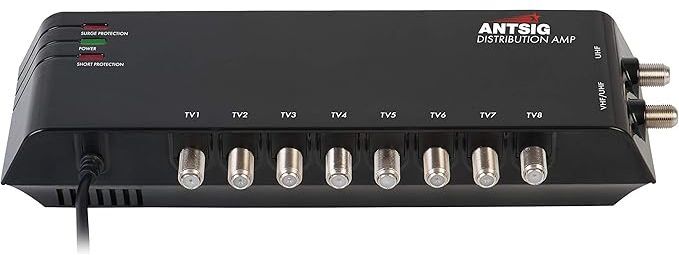
Antsig Distribution Amplifier 8 Way, NewEnsure crystal-clear signal strength across multiple devices with the Antsig Distribution Amplifier 8 Way — a reliable and high-performance solution for distributing digital TV, FM, or DAB signals to multiple TVs or tuners in your home or commercial setup. This amplifier is designed to boost signal strength and maintain picture and sound quality, especially in areas with weak reception. Whether you're connecting TVs in different rooms or setting up a home entertainment system, Antsig delivers superior signal stability and wide coverage, making it the perfect choice for seamless media enjoyment. 🔶 ( 8-Way Signal Distribution ) – Distributes amplified signal to up to 8 different TVs or devices without signal loss. 🔶 ( High Gain Amplification ) – Enhances weak signals, improving clarity and reception across all connected devices. 🔶 ( Digital TV, FM & DAB Compatible ) – Supports a wide range of signals for versatile use in your entertainment setup. 🔶 ( Easy Plug-and-Play Installation ) – Simple setup with no complex configuration needed; ready to go out of the box. 🔶 ( Low Noise Output ) – Delivers a clean, interference-free signal for superior audio and video performance. 🔶 ( Compact & Durable Design ) – Space-saving design fits easily into any setup and built with long-lasting components. 🔶 ( Ideal for Homes & Commercial Spaces ) – Perfect for large households, offices, apartments, and hotels. 🔶 ( Power Supply Included ) – Comes complete with its own power adapter for uninterrupted performance. 🔶 ( Stable Signal Across All Ports ) – Ensures consistent signal strength across all 8 outputs. 🔶 ( Wall-Mountable Option ) – Flexible installation with optional wall mounting for better space management. The Antsig Distribution Amplifier 8 Way is the ultimate solution for homes or businesses needing consistent, high-quality signal distribution across multiple screens. Say goodbye to signal dropouts and enjoy uninterrupted entertainment with strong, stable performance in every room. Ideal for digital TV installations, this amplifier ensures you get the best possible viewing and listening experience from all your connected devices.24,99 £*Shipping: 0,00 £Secure redirect to the provider
-
Uplifted Finds Mini Portable Folding Stove And High Fidelity Thermal Logistics Architecture Mini Portable Folding Stove And High Fidelity Thermal Logistics ArchitectureCommand ultimate environmental confidence with this Stainless Steel Mini Folding Stove, a thermal regulation solution specifically engineered to act as a comprehensive tool for elite organization and superior technical ergonomics. Built with a...177,97 $*Shipping: 0,00 $Secure redirect to the provider
-
Uplifted Finds High Volume Safety Breakaway Logistics Hub blueOptimize your pet inventory management with the HighVolume Safety Hub, a professionalgrade identification system engineered with multiunit deployment logic. This highutility lot features 100 individual collar modules, each constructed with a...165,97 $*Shipping: 0,00 $Secure redirect to the provider
-
Uplifted Finds High Volume Safety Breakaway Logistics Hub grayOptimize your pet inventory management with the HighVolume Safety Hub, a professionalgrade identification system engineered with multiunit deployment logic. This highutility lot features 100 individual collar modules, each constructed with a...165,97 $*Shipping: 0,00 $Secure redirect to the provider



-
What are relative clauses and conjunctional clauses?
Relative clauses are clauses that provide additional information about a noun in the main clause. They are introduced by relative pronouns such as "who," "which," "that," and "whom." For example, in the sentence "The book that I read is very interesting," the relative clause "that I read" provides more information about the noun "book." Conjunctional clauses, on the other hand, are clauses that are connected to the main clause by conjunctions such as "and," "but," "or," "if," and "because." They can express relationships such as addition, contrast, alternative, condition, and cause. For example, in the sentence "I will go to the park if the weather is nice," the conjunctional clause "if the weather is nice" expresses a condition for the action in the main clause. **
-
What are the French conditional clauses (si-clauses)?
French conditional clauses, also known as si-clauses, are used to express a hypothetical situation and its potential outcome. They consist of two parts: the si clause (if clause), which describes the condition, and the main clause, which describes the potential result. The si clause is typically formed using the conjunction "si" followed by the imperfect tense or the pluperfect tense, while the main clause is formed using the conditional tense. These clauses are commonly used to talk about what would happen in certain situations if a specific condition were met. **
-
How can one recognize main clauses and subordinate clauses?
Main clauses can stand alone as complete sentences, while subordinate clauses cannot. Subordinate clauses often begin with subordinating conjunctions such as "although," "because," "if," "when," or "while." They also often contain a subject and a verb, but they do not express a complete thought on their own. Main clauses, on the other hand, express a complete thought and can function as independent sentences. By identifying these characteristics, one can recognize main and subordinate clauses in a sentence. **
-
How can adverbial clauses be used as subordinate clauses?
Adverbial clauses can be used as subordinate clauses to provide additional information about the main clause. They can modify the verb in the main clause by expressing time, place, manner, condition, reason, purpose, or concession. For example, in the sentence "She went to bed after she finished her homework," the adverbial clause "after she finished her homework" provides information about the timing of the main action "She went to bed." Adverbial clauses are introduced by subordinating conjunctions such as after, before, while, since, because, if, although, etc. **


How can subordinate clauses be rewritten as main clauses?
Subordinate clauses can be rewritten as main clauses by removing the subordinating conjunction and making any necessary adjustments to the verb tense or word order. For example, the subordinate clause "because she was tired" can be rewritten as the main clause "she was tired." This transformation allows the subordinate clause to stand alone as a complete sentence. Additionally, any pronouns or other words that were dependent on the subordinating conjunction may need to be adjusted to ensure the new main clause is grammatically correct. **
How do I transform subordinate clauses into main clauses?
To transform a subordinate clause into a main clause, you need to make sure that the clause can stand alone as a complete sentence. This means adding a subject and a verb to the clause if it doesn't already have them. You may also need to adjust the word order or add any necessary punctuation. Once these changes are made, the subordinate clause will become a main clause that can function independently within a sentence. **
Top-Angebote
Products related to Clauses:
-
Enesco/Dept 56 More Letters for the Clauses Clothtique Red , RedEvery year, Mr. and Mrs. Claus are eager to receive and read More Letters for the Clauses. The red mailbox has holiday accents including holly leaves, red berries, and a red bow; it is filled with wrapped packages and rolled-up letters. This happy...149,99 $*Shipping: 20,95 $Secure redirect to the provider
-
Enesco/Dept 56 More Letters for the Clauses African American Clothtique Red , RedEvery year, Mr. and Mrs. Claus are eager to receive and read More Letters for the Clauses. The red mailbox has holiday accents including holly leaves, red berries, and a red bow; it is filled with wrapped packages and rolled-up letters. This happy,...149,99 $*Shipping: 20,95 $Secure redirect to the provider
-
Antsig Distribution Amplifier 8 Way, NewEnsure crystal-clear signal strength across multiple devices with the Antsig Distribution Amplifier 8 Way — a reliable and high-performance solution for distributing digital TV, FM, or DAB signals to multiple TVs or tuners in your home or commercial setup. This amplifier is designed to boost signal strength and maintain picture and sound quality, especially in areas with weak reception. Whether you're connecting TVs in different rooms or setting up a home entertainment system, Antsig delivers superior signal stability and wide coverage, making it the perfect choice for seamless media enjoyment. 🔶 ( 8-Way Signal Distribution ) – Distributes amplified signal to up to 8 different TVs or devices without signal loss. 🔶 ( High Gain Amplification ) – Enhances weak signals, improving clarity and reception across all connected devices. 🔶 ( Digital TV, FM & DAB Compatible ) – Supports a wide range of signals for versatile use in your entertainment setup. 🔶 ( Easy Plug-and-Play Installation ) – Simple setup with no complex configuration needed; ready to go out of the box. 🔶 ( Low Noise Output ) – Delivers a clean, interference-free signal for superior audio and video performance. 🔶 ( Compact & Durable Design ) – Space-saving design fits easily into any setup and built with long-lasting components. 🔶 ( Ideal for Homes & Commercial Spaces ) – Perfect for large households, offices, apartments, and hotels. 🔶 ( Power Supply Included ) – Comes complete with its own power adapter for uninterrupted performance. 🔶 ( Stable Signal Across All Ports ) – Ensures consistent signal strength across all 8 outputs. 🔶 ( Wall-Mountable Option ) – Flexible installation with optional wall mounting for better space management. The Antsig Distribution Amplifier 8 Way is the ultimate solution for homes or businesses needing consistent, high-quality signal distribution across multiple screens. Say goodbye to signal dropouts and enjoy uninterrupted entertainment with strong, stable performance in every room. Ideal for digital TV installations, this amplifier ensures you get the best possible viewing and listening experience from all your connected devices.24,99 £*Shipping: 0,00 £Secure redirect to the provider
-
Uplifted Finds Mini Portable Folding Stove And High Fidelity Thermal Logistics Architecture Mini Portable Folding Stove And High Fidelity Thermal Logistics ArchitectureCommand ultimate environmental confidence with this Stainless Steel Mini Folding Stove, a thermal regulation solution specifically engineered to act as a comprehensive tool for elite organization and superior technical ergonomics. Built with a...177,97 $*Shipping: 0,00 $Secure redirect to the provider
-
What are conjunctional clauses, relative clauses, demonstrative clauses, and infinitive clauses?
Conjunctional clauses are dependent clauses that are introduced by a conjunction, such as "because," "although," or "while." They provide additional information about the main clause in a sentence. Relative clauses are also dependent clauses that provide more information about a noun in the main clause. They are introduced by relative pronouns like "who," "which," or "that." Demonstrative clauses are dependent clauses that function as adjectives and provide more information about a noun in the main clause. They are introduced by demonstrative pronouns like "this," "that," "these," or "those." Infinitive clauses are dependent clauses that are formed with an infinitive verb (to + base form of the verb). They can function as nouns, adjectives, or adverbs in a sentence. **
-
Are conjunctive clauses always adverbial clauses?
No, conjunctive clauses are not always adverbial clauses. While adverbial clauses are a type of conjunctive clause that function as adverbs to modify verbs, adjectives, or other adverbs, there are also other types of conjunctive clauses. For example, there are conjunctive clauses that function as noun clauses, such as in "I know that you are busy." In this sentence, "that you are busy" is a conjunctive clause functioning as a noun clause, not an adverbial clause. Therefore, conjunctive clauses can serve various grammatical functions beyond just adverbial clauses. **
-
What are relative clauses and conjunctional clauses?
Relative clauses are clauses that provide additional information about a noun in the main clause. They are introduced by relative pronouns such as "who," "which," "that," and "whom." For example, in the sentence "The book that I read is very interesting," the relative clause "that I read" provides more information about the noun "book." Conjunctional clauses, on the other hand, are clauses that are connected to the main clause by conjunctions such as "and," "but," "or," "if," and "because." They can express relationships such as addition, contrast, alternative, condition, and cause. For example, in the sentence "I will go to the park if the weather is nice," the conjunctional clause "if the weather is nice" expresses a condition for the action in the main clause. **
-
What are the French conditional clauses (si-clauses)?
French conditional clauses, also known as si-clauses, are used to express a hypothetical situation and its potential outcome. They consist of two parts: the si clause (if clause), which describes the condition, and the main clause, which describes the potential result. The si clause is typically formed using the conjunction "si" followed by the imperfect tense or the pluperfect tense, while the main clause is formed using the conditional tense. These clauses are commonly used to talk about what would happen in certain situations if a specific condition were met. **
Similar search terms for Clauses
-
Uplifted Finds High Volume Safety Breakaway Logistics Hub blueOptimize your pet inventory management with the HighVolume Safety Hub, a professionalgrade identification system engineered with multiunit deployment logic. This highutility lot features 100 individual collar modules, each constructed with a...165,97 $*Shipping: 0,00 $Secure redirect to the provider
-
Uplifted Finds High Volume Safety Breakaway Logistics Hub grayOptimize your pet inventory management with the HighVolume Safety Hub, a professionalgrade identification system engineered with multiunit deployment logic. This highutility lot features 100 individual collar modules, each constructed with a...165,97 $*Shipping: 0,00 $Secure redirect to the provider
-
Uplifted Finds High Volume Safety Breakaway Logistics Hub coffeeOptimize your pet inventory management with the HighVolume Safety Hub, a professionalgrade identification system engineered with multiunit deployment logic. This highutility lot features 100 individual collar modules, each constructed with a...165,97 $*Shipping: 0,00 $Secure redirect to the provider
-
Uplifted Finds High Volume Safety Breakaway Logistics Hub greenOptimize your pet inventory management with the HighVolume Safety Hub, a professionalgrade identification system engineered with multiunit deployment logic. This highutility lot features 100 individual collar modules, each constructed with a...165,97 $*Shipping: 0,00 $Secure redirect to the provider
-
How can one recognize main clauses and subordinate clauses?
Main clauses can stand alone as complete sentences, while subordinate clauses cannot. Subordinate clauses often begin with subordinating conjunctions such as "although," "because," "if," "when," or "while." They also often contain a subject and a verb, but they do not express a complete thought on their own. Main clauses, on the other hand, express a complete thought and can function as independent sentences. By identifying these characteristics, one can recognize main and subordinate clauses in a sentence. **
-
How can adverbial clauses be used as subordinate clauses?
Adverbial clauses can be used as subordinate clauses to provide additional information about the main clause. They can modify the verb in the main clause by expressing time, place, manner, condition, reason, purpose, or concession. For example, in the sentence "She went to bed after she finished her homework," the adverbial clause "after she finished her homework" provides information about the timing of the main action "She went to bed." Adverbial clauses are introduced by subordinating conjunctions such as after, before, while, since, because, if, although, etc. **
-
How can subordinate clauses be rewritten as main clauses?
Subordinate clauses can be rewritten as main clauses by removing the subordinating conjunction and making any necessary adjustments to the verb tense or word order. For example, the subordinate clause "because she was tired" can be rewritten as the main clause "she was tired." This transformation allows the subordinate clause to stand alone as a complete sentence. Additionally, any pronouns or other words that were dependent on the subordinating conjunction may need to be adjusted to ensure the new main clause is grammatically correct. **
-
How do I transform subordinate clauses into main clauses?
To transform a subordinate clause into a main clause, you need to make sure that the clause can stand alone as a complete sentence. This means adding a subject and a verb to the clause if it doesn't already have them. You may also need to adjust the word order or add any necessary punctuation. Once these changes are made, the subordinate clause will become a main clause that can function independently within a sentence. **
* All prices are inclusive of VAT and, if applicable, plus shipping costs. The offer information is based on the details provided by the respective shop and is updated through automated processes. Real-time updates do not occur, so deviations can occur in individual cases. ** Note: Parts of this content were created by AI.